
Foot Wound Healing & Circulation
Resources & Articles
Education for patients with foot wounds, diabetes-related foot problems, and circulation concerns.
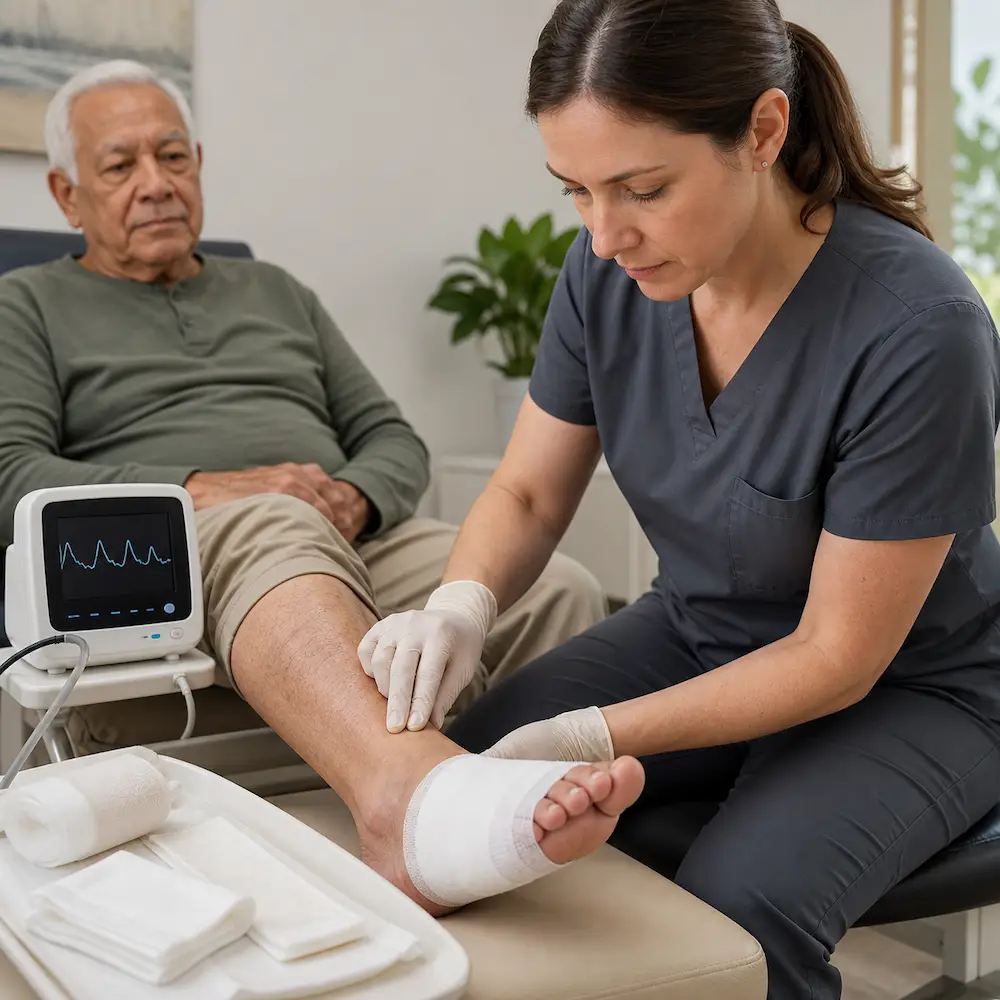
Why Your Foot Wound Is Not Healing — And Why Blood Flow May Be the Missing Answer.
A nonhealing foot wound is not always a wound-care failure. This article explains the role of arterial circulation in wound healing, why poor blood flow can prevent even well-managed wounds from closing, and what to do when healing has stalled despite standard treatment.
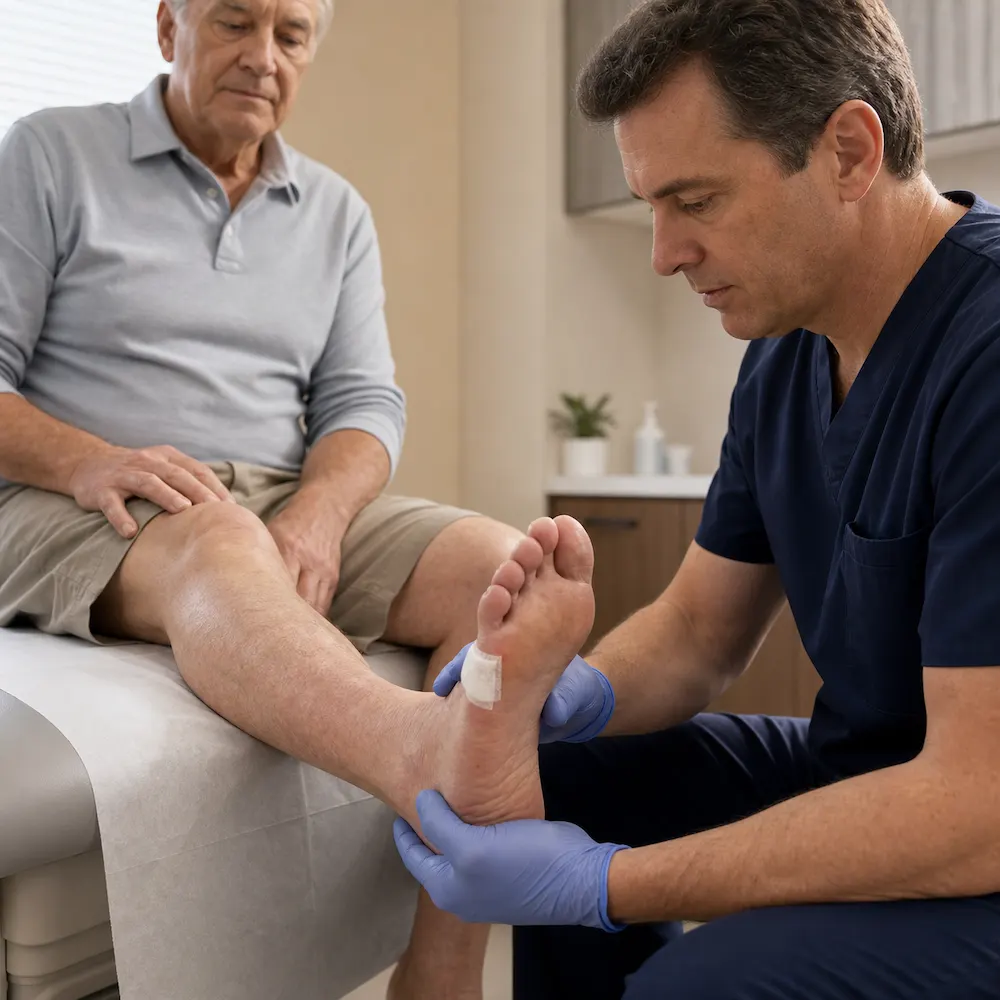
The Warning Signs of Chronic Limb-Threatening Ischemia — What Every Foot Wound Patient Should Know
Chronic limb-threatening ischemia (CLTI) is the most serious form of peripheral artery disease. This article explains the warning signs — including rest pain, nonhealing wounds, and gangrene — and why recognizing them early may be the most important factor in preserving the limb.
More Articles & Resources
Diabetes and Foot Wounds: Why This Combination Requires Urgent Attention
About half of people with diabetes and a foot ulcer also have peripheral artery disease. This article explains why that combination significantly raises limb risk, how neuropathy can mask warning signs, and why circulation should always be assessed when a diabetic foot wound is present.
Black Toes and Gangrene — What They Mean and Why They Are an Emergency
Discoloration or blackening of the toes is never a cosmetic issue. This article explains what tissue color changes indicate about blood flow, when gangrene represents a limb-threatening emergency, and why fast action can be the difference between limb preservation and amputation.
What Is Peripheral Artery Disease (PAD) — A Plain-Language Guide for Patients
PAD is one of the most underdiagnosed vascular conditions. This article explains what PAD is, how it develops, why it affects the feet and legs, and why it is especially dangerous for people with diabetes or foot wounds.
Rest Pain in the Foot at Night: What It Means and When to Act
Pain in the foot that wakes you at night — or that improves when you hang the foot off the bed — is one of the defining symptoms of advanced circulation disease. This article explains why it happens, why it is different from leg cramps, and why it requires prompt medical evaluation.
Atherectomy and Endovascular Treatment: How Blocked Leg Arteries Are Treated Without Open Surgery
When arteries in the leg are narrowed or blocked, minimally invasive endovascular procedures can restore blood flow through a small catheter. This article explains atherectomy, angioplasty, and stenting — what each procedure involves, how it is performed, and what recovery looks like.
What Happens at a Vascular Circulation Evaluation for a Foot Wound?
Many patients do not know what to expect when they are referred for a vascular evaluation. This article walks through the process — from history and physical examination to noninvasive testing and imaging — and explains what each step is designed to determine.
Why Waiting Can Be Dangerous: The Cost of Delayed Circulation Evaluation in Foot Wounds
When circulation is limiting wound healing, every week of delay is a week in which tissue may be dying, infection may be spreading, and the window for minimally invasive treatment may be narrowing. This article explains the clinical consequences of delayed vascular evaluation and why earlier action typically leads to better outcomes.
Limb Preservation vs. Amputation: Understanding the Decision
Amputation is not inevitable for patients with poor circulation and foot wounds — but it becomes more likely when the blood-flow problem is not recognized and treated in time. This article explains how limb preservation decisions are made, what the role of revascularization is, and what questions to ask your care team.
Take the 2-Minute Circulation Risk Assessment.
See whether your foot symptoms suggest a pattern that needs specialized evaluation.