
Circulation evaluation & limb preservation.
What you need to know.
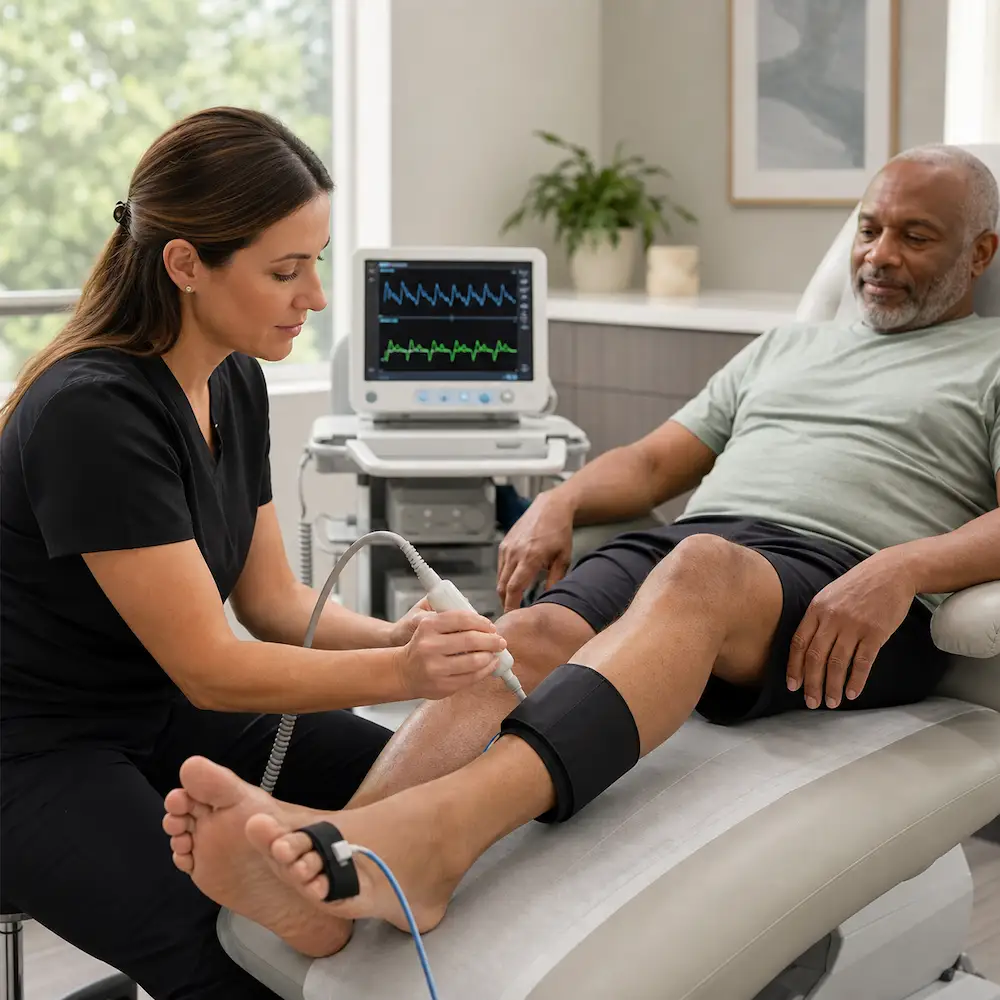
What a specialized circulation evaluation may involve.
If your symptoms suggest that blood flow could be contributing to poor healing or foot pain, the next step may be a more focused evaluation of circulation in the legs and feet. This type of assessment looks beyond the surface wound to ask a deeper question: is enough blood reaching the tissue to support healing?
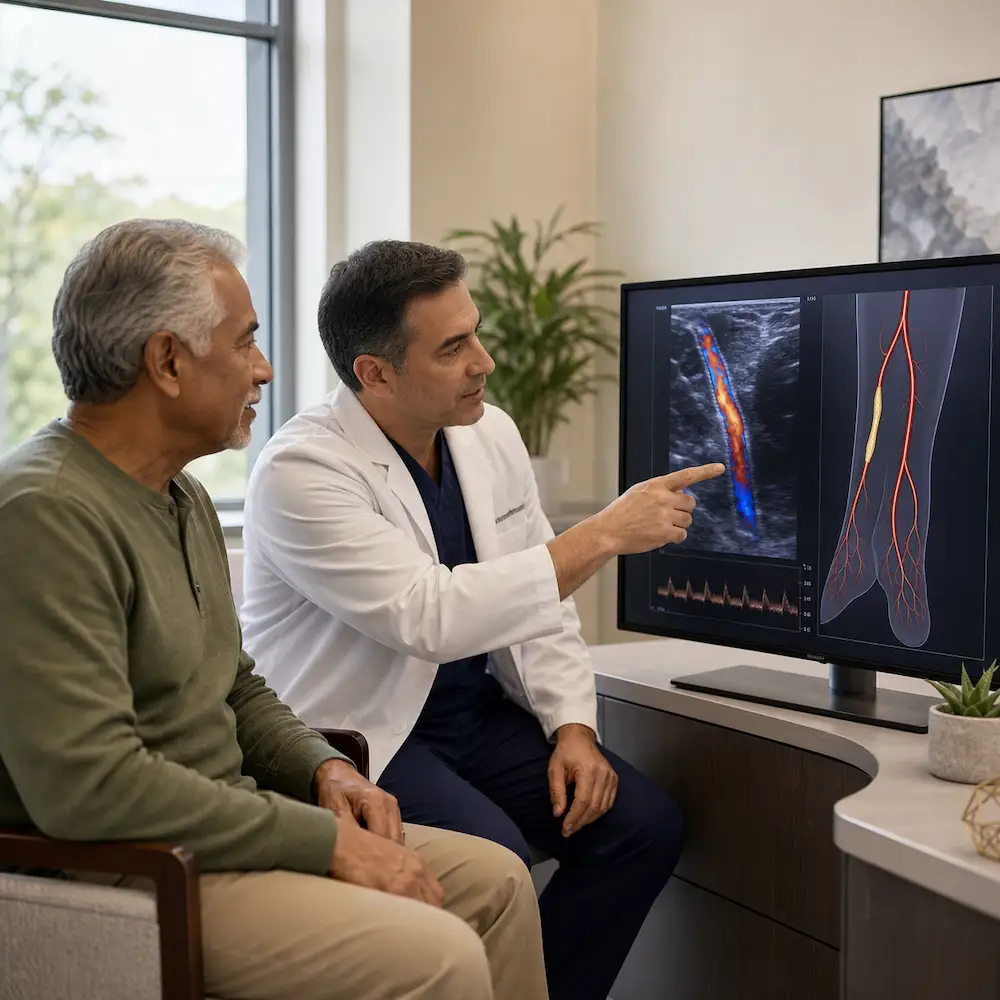
The goal of circulation evaluation
A circulation evaluation is meant to determine whether narrowed or blocked arteries may be limiting healing, increasing pain, or threatening tissue.
In patients with suspected chronic limb-threatening ischemia, guidelines support additional perfusion testing beyond a routine ABI, including:
- Toe pressures and toe-brachial index (TBI)
- Transcutaneous oxygen pressure (TcPO2)
- Skin perfusion pressure
- Duplex ultrasound of the leg arteries
- CT angiography or MR angiography when advanced imaging is needed
The purpose is not simply to assign a diagnosis. It is to understand whether the limb is at risk and whether restoring blood flow could help preserve tissue and improve wound healing.
What treatment discussions may include:
Treatment depends on what is found. Some patients need:
- Optimization of wound care and offloading
- Risk-factor control (blood pressure, blood sugar, cholesterol, smoking cessation)
- Infection treatment if present
- Medical therapy (antiplatelet agents, lipid-lowering medications)
- Revascularization — restoring blood flow directly through endovascular or surgical means
Endovascular options (performed through a small catheter, without open surgery) include angioplasty, stenting, and atherectomy — procedures that open narrowed or blocked arteries from the inside to restore circulation to the foot.
Why revascularization matters.
Current lower-extremity PAD guidelines recommend revascularization in patients with chronic limb-threatening ischemia to:
- Minimize tissue loss
- Promote wound healing
- Relieve rest pain
- Preserve a functional limb
In patients with nonhealing wounds or gangrene, revascularization that improves perfusion to the wound bed can be directly beneficial to healing outcomes. That is the clinical rationale behind StopAmputation360.com’s focus: not general leg discomfort, but the higher-risk patient whose healing may depend on restoring blood flow.
Why limb preservation starts with early recognition
Limb preservation is about protecting tissue, function, mobility, and quality of life before a foot problem progresses too far. It begins with recognizing when a wound or pain pattern may reflect a blood-flow emergency rather than a routine healing delay.
What “Limb Threat” Really Means
Limb threat does not always begin with a dramatic event. It may begin with a toe wound that lingers, a small area of dead tissue, or pain in the foot at night that gets brushed aside. Over time, if circulation is poor, these signs can progress toward infection, gangrene, hospitalization, and amputation.
The Value of Acting Before Amputation Is Discussed
Guidelines emphasize that patients with chronic limb-threatening ischemia should be evaluated for revascularization options before amputation occurs. This is a core principle of modern limb salvage care — and why multispecialty evaluation is so important.
StopAmputation360.com exists to support that earlier moment: when there is still time to recognize risk, escalate appropriately, and explore whether improved blood flow may help protect the foot.
A Broader Goal Than Wound Closure
Saving the limb is not only about closing a wound. It is about preserving walking ability, independence, pain control, and quality of life. For many patients, early recognition of poor circulation may influence the entire course of care.