
Diabetes, Foot Risk & When to Seek Urgent Care
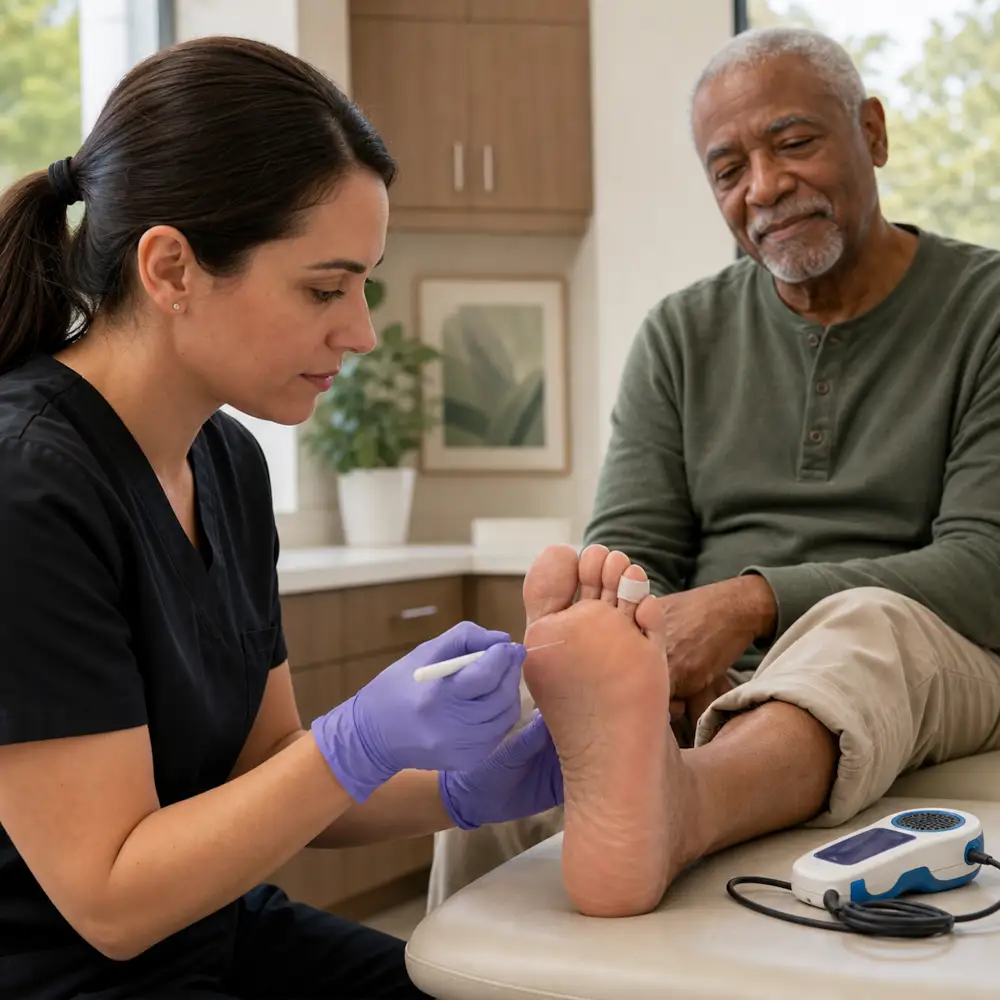
Why diabetes makes foot wounds more dangerous
Diabetes changes the way wounds develop, the way they are felt, and the way they heal. It can damage nerves, reduce sensation, increase infection risk, and coexist with peripheral artery disease — all of which make a small foot injury more dangerous than it first appears.
Diabetic foot guidelines emphasize that PAD is common among people with diabetes and foot ulcers or gangrene, and that its presence significantly worsens healing and amputation risk.

Nerve damage can hide the problem
Many people with diabetes develop neuropathy, which reduces feeling in the feet. That means patients may not notice a blister, pressure injury, or ulcer right away. By the time the wound is discovered, it may already be deeper, infected, or harder to heal.
When poor circulation is also present, the tissue has less capacity to recover, and the wound may persist despite dressings, offloading, and local care.
Diabetes plus PAD is a high-risk combination
About half of people with diabetes and a foot ulcer are estimated to have PAD. The presence of PAD significantly increases the risk of adverse limb events and amputation.
Modern diabetic foot care does not treat ulcers as a surface problem alone. It looks closely at perfusion, wound severity, infection, and limb threat together.
Why healing may stall
A diabetic foot wound may fail to heal for several reasons at once:
- Pressure and friction from footwear or gait
- Active or subclinical infection
- Elevated blood glucose impairing immune function
- Peripheral neuropathy masking injury
- Poor arterial blood flow to the wound bed
The challenge is that circulation problems may be underrecognized unless they are actively looked for. This platform is designed around that problem — to help patients recognize when a wound may deserve not only wound care, but also a more advanced blood-flow evaluation.
Understanding peripheral artery disease (PAD)
Peripheral artery disease (PAD) is the narrowing or blockage of arteries in the legs caused by plaque buildup. It reduces blood flow to the feet and lower legs.
Many people with PAD do not have classic walking pain (claudication). In higher-risk patients, the more important signs may be in the foot itself: a wound that will not heal, tissue that changes color, pain at rest, or coldness in one foot compared to the other.
Some patients with severe disease develop chronic limb-threatening ischemia (CLTI) — the most serious form of PAD — which presents with:
- Rest pain (especially at night, relieved by hanging the foot down)
- Nonhealing wounds or ulcers
- Gangrene or tissue loss
CLTI requires urgent vascular evaluation. Guidelines are clear that these patients should be evaluated for revascularization options to preserve the limb.
Why fast attention matters
The combination of diabetes, a foot ulcer, and poor circulation is not something to watch without a plan. The longer the wound stays open, the greater the opportunity for infection, tissue loss, hospitalization, and possible amputation.
What wound care and podiatry may miss
Wound care and podiatric care are important, but current diabetic foot guidance emphasizes that poor perfusion should be assessed when ulcers or gangrene are present — since blood-flow problems can directly affect the likelihood of healing.
If you are already receiving wound care and healing has not progressed, this does not mean your wound care team has done anything wrong. It may mean that a circulation evaluation has not yet been part of the picture, and identifying that gap could change the treatment plan.
When to seek urgent care
⚠ Review these urgent warning signs and seek immediate medical attention if you have:
Black, dead, or darkening tissue anywhere on the foot or toes, Rapidly worsening pain that does not respond to usual measures, Spreading redness, warmth, or swelling suggesting spreading infection, A foot or leg that suddenly becomes cold, pale, or numb, A wound that is deteriorating quickly despite ongoing care, Fever alongside a foot wound
Do not use this website for emergencies. If these signs are present, call your doctor, go to urgent care, or call 911.