
Why Foot Wounds Stop Healing.
Warning Signs of Poor Circulation.
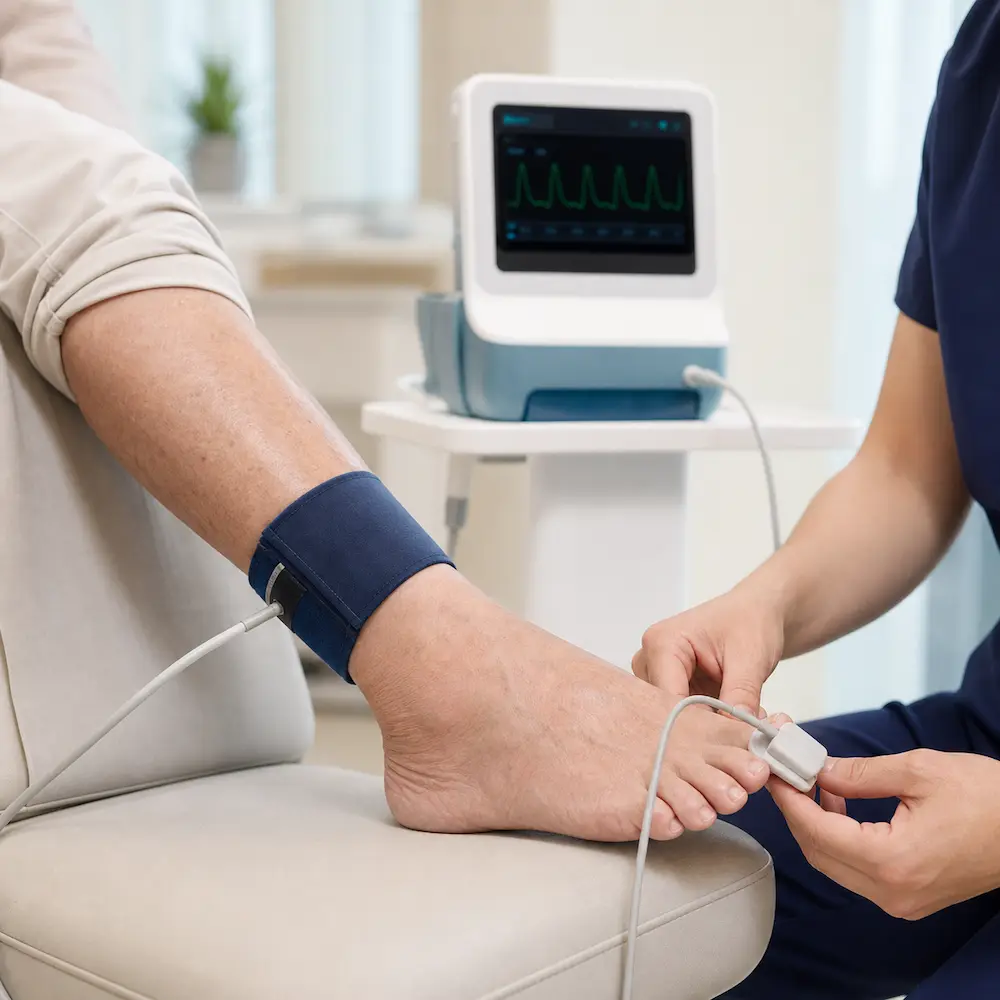
Why some foot wounds do not heal.
A healthy foot wound needs several things to heal: enough blood flow, enough oxygen, pressure relief, infection control, and time. If one of those elements is missing, healing may slow down. If blood flow is missing, healing may stall completely.
That is why some wounds keep returning, stay open for weeks, or get worse even when a patient is doing everything right. The problem may not be wound care alone. The deeper problem may be circulation.
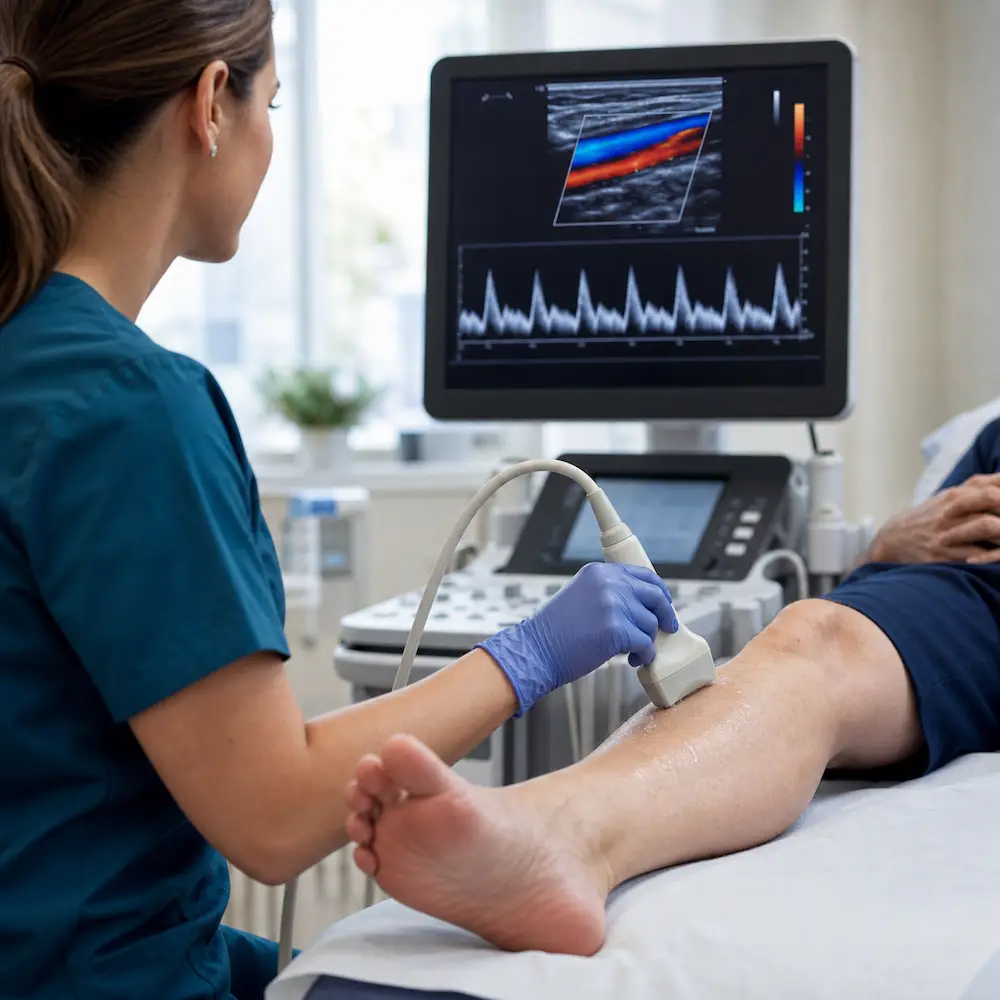
The role of blood flow in wound healing.
Arteries carry oxygen-rich blood from the heart to the legs and feet. When those arteries become narrowed by plaque, the foot receives less blood than it needs. The result may be pain, delayed healing, dead tissue, or infection that becomes harder to control because the body’s repair system cannot work effectively in underperfused tissue.
For patients with chronic limb-threatening ischemia, restoring blood flow can become central to treatment — because wound care alone may not be enough to close the wound or protect the limb.
Why wounds are often misread
A nonhealing wound is easy to attribute to shoes, pressure, diabetes, neuropathy, or infection alone. Those issues are common and important, but they can distract from the arterial problem if circulation is not considered early.
Current diabetic foot guidance specifically emphasizes that in people with diabetes and a foot ulcer or gangrene, clinicians should assess for peripheral artery disease and other causes of poor perfusion rather than assuming small-vessel disease or diabetes alone explains the wound.
Why this is especially important in the foot
The foot is vulnerable because it is far from the heart, exposed to daily pressure, and often affected by neuropathy in people with diabetes. When a wound develops in that setting, poor blood flow may mean even a small blister, callus injury, or ulcer does not receive what it needs to heal.
When circulation is severely reduced, the wound may darken, the edges may stop granulating, pain may worsen at night, or tissue may begin to die. These are signs that the foot may need more than routine wound care.
Warning signs that poor circulation may be affecting your foot
One of the most important warning signs is a sore, ulcer, blister, incision, or skin breakdown on the foot or toes that heals slowly or not at all. A wound that remains open despite care may be telling you that the tissue is not getting enough circulation to repair itself. This is especially concerning when the wound has been present for weeks, repeatedly reopens, or worsens after seeming to improve.
SEEK URGENT MEDICAL ATTENTION IF YOU HAVE: Black tissue or gangrene, Rapidly worsening pain, Spreading redness or infection, A foot that suddenly becomes cold or pale, A wound that is getting worse quickly, Review the urgent warning signs of a possible limb-threatening emergency. Do not wait.
Diabetes and foot risk
Diabetes changes the way wounds develop, the way they are felt, and the way they heal. It can damage nerves, reduce sensation, increase infection risk, and coexist with peripheral artery disease — all of which make a small foot injury more dangerous than it first appears.
| Nerve Damage Can Hide the Problem | Diabetes Plus PAD Is a High-Risk Combination | Why Fast Attention Matters |
|---|---|---|
| Many people with diabetes develop neuropathy, which reduces feeling in the feet. That means patients may not notice a blister, pressure injury, or ulcer right away. By the time the wound is discovered, it may already be deeper, infected, or harder to heal. When poor circulation is also present, the tissue has less capacity to recover. | About half of people with diabetes and a foot ulcer are estimated to have PAD, and the presence of PAD significantly increases the risk of adverse limb events and amputation. Modern diabetic foot care looks closely at perfusion, wound severity, infection, and limb threat all together — not the wound surface alone. | The combination of diabetes, a foot ulcer, and poor circulation is not something to watch without a plan. The longer the wound stays open, the greater the opportunity for infection, tissue loss, hospitalization, and possible amputation. |