

Will My Foot Wound Heal?
Take a 2-minute circulation risk assessment to see whether poor blood flow
could be delaying healing or raising your risk of losing a toe, foot, or leg.
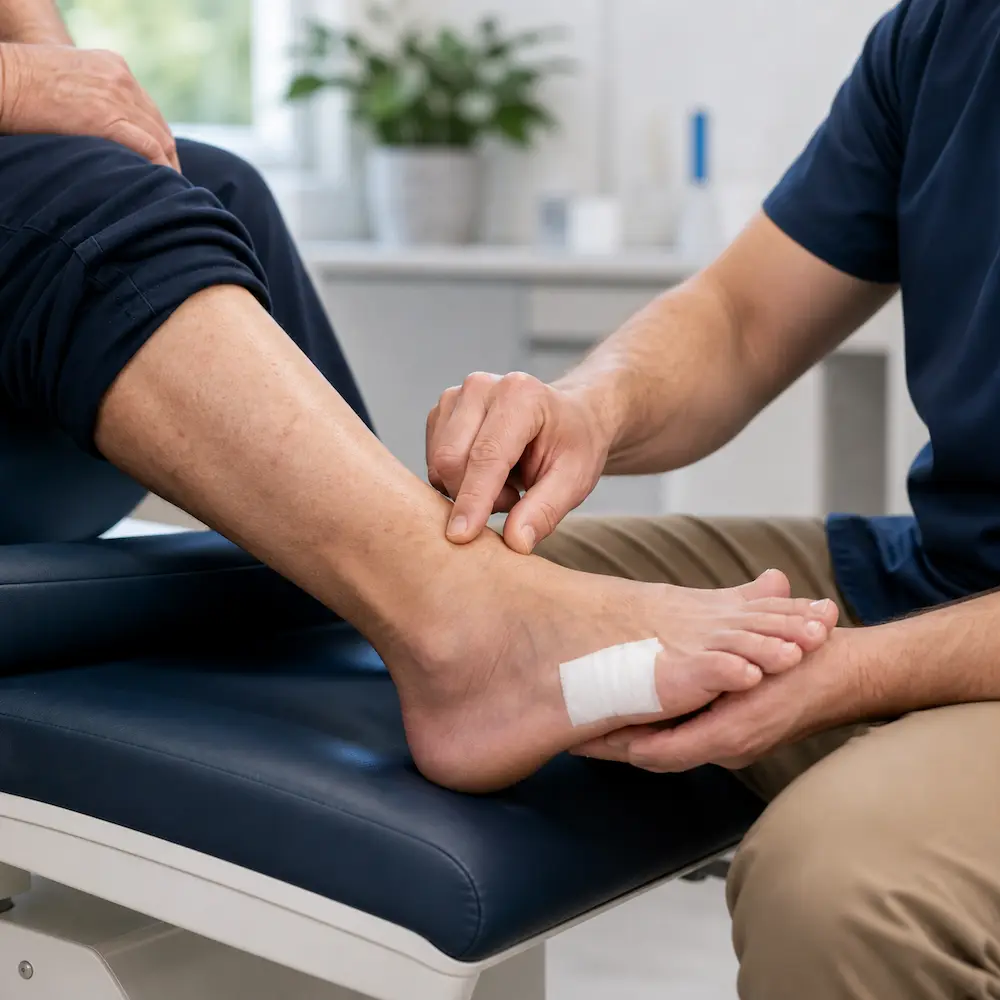
A wound that won’t heal may be more than a skin problem.
Most people think of a foot wound as a skin issue, a pressure issue, or an infection issue. Sometimes it is. But in many patients — especially those with diabetes or known circulation risk factors — the real reason healing stalls is that not enough blood is reaching the foot.
When arteries in the leg become narrowed or blocked, the foot may not get the oxygen and nutrients needed to repair tissue. That can turn a small sore into a prolonged wound, a prolonged wound into tissue loss, and tissue loss into a limb-threatening emergency if it is not recognized early.

Why www.stopamputation360.com exists.
StopAmputation360.com was created to help patients recognize when a slow-healing wound could be a circulation problem. The goal is not to alarm people unnecessarily. The goal is to help the right patients recognize serious warning signs early enough to seek specialized evaluation before healing falls further behind.
This website is especially relevant for people with nonhealing ulcers, darkened toes, foot pain at night, prior amputation, poor circulation, or diabetes-related foot problems — because these are the findings most closely linked to chronic limb-threatening ischemia and limb loss risk.
Who should use this site?
This website may be helpful if you:
- Have a sore, ulcer, blister, or wound on the foot or toes that is healing slowly or not at all
- Have diabetes and any wound on the foot, heel, or toes
- Have black, dark, blue, pale, or gray changes in the toes or foot
- Have pain in the foot at rest or at night, especially worse when lying flat
- Have been told you have poor circulation, weak pulses, or blocked leg arteries
- Have had a prior toe amputation, prior circulation procedure, or repeated wounds in the same foot
What happens after the assessment?
After completing the assessment, you will receive a simple explanation of whether your symptoms suggest a low, moderate, or higher level of concern related to circulation and healing. If your answers suggest warning signs linked to limb threat, you may be guided toward prompt medical follow-up and a more specialized circulation review.
The purpose is not to replace a doctor visit. It is to help identify people who may need a more advanced look at blood flow — especially when routine wound care alone may not be enough.
WHY EARLY ACTION MATTERS.
In the more severe forms of circulation disease, patients may develop chronic limb-threatening ischemia, which can present with rest pain, nonhealing wounds, ulcers, or gangrene. Current guidelines emphasize that in these patients, revascularization is recommended to minimize tissue loss, promote wound healing, relieve pain, and preserve a functional limb.
That makes timing important. The earlier the blood-flow problem is recognized, the greater the chance that tissue can be protected and healing can be supported before amputation becomes part of the conversation.
⚠ URGENT WARNING: Black tissue, rapidly worsening pain, spreading infection, or sudden coldness of the footshould be treated as urgent warning signs. Seek immediate medical care — do not wait.
Not every foot wound is just a wound-care problem.
If healing has stalled, poor circulation may be part of the reason. Start the assessment to see whether your symptoms match a higher-risk pattern that deserves specialized review.




Our Latest Articles

Warning Signs That a Nonhealing Foot Ulcer Could Threaten Your Limb
A foot ulcer that does not heal is more than a skin problem It may be a sign that the…

How Early Circulation Testing May Help Prevent Amputation
Learn how early circulation testing can identify poor blood flow guide timely vascular care and support limb-preservation efforts before tissue…
Can Poor Circulation Prevent a Foot Ulcer From Healing?
Learn how poor circulation and PAD can prevent a foot ulcer from healing which warning signs matter and when vascular…