Yes. Poor circulation can prevent a foot ulcer from healing. A wound needs a steady supply of oxygen, nutrients, immune cells, and other repair materials carried by the blood. When arteries in the leg are narrowed or blocked, the foot may not receive enough blood to rebuild damaged tissue—even when dressings, antibiotics, pressure relief, and diabetes care are being used correctly.
This does not mean every slow-healing ulcer is caused by poor circulation. Infection, repeated pressure, nerve damage, swelling, and other health conditions can also delay healing. Often, several problems are present at the same time. The important question is whether reduced arterial blood flow is one of them.
Why blood flow matters to wound healing
Arteries deliver oxygen-rich blood from the heart to the legs and feet. When a wound forms, the surrounding tissue needs additional resources to fight germs, create new cells, and close the injured area. If blood flow is severely reduced, the wound may remain open, become deeper, develop dead tissue, or become harder to protect from infection.
Peripheral artery disease (PAD) is a common cause of reduced blood flow to the lower limbs. PAD usually develops when plaque narrows the arteries. Diabetes, smoking, kidney disease, high blood pressure, high cholesterol, and older age can increase risk. Some people have leg pain when walking, but others first discover the problem after a toe or foot wound does not heal.
Signs that poor circulation may be affecting an ulcer
A healthcare professional must evaluate the wound and circulation, but certain patterns deserve attention:
- The ulcer has shown little improvement despite appropriate wound care and pressure relief.
- The foot or lower leg feels cooler than the other side.
- The skin looks pale when elevated, bluish, unusually shiny, or red when the foot is lowered.
- Foot or toe pain becomes worse at night or when lying flat.
- There is little hair growth on the leg, slow toenail growth, or weak foot pulses.
- The wound edges look dry, dark, or poorly supplied with healthy new tissue.
- A toe becomes black or develops gangrene.
Neuropathy can make this more difficult to recognize. A person with diabetes may have severe circulation disease without the amount of pain that would normally be expected. That is why the absence of pain does not prove that blood flow is adequate. Learn more about diabetes and foot risks.
How circulation is evaluated
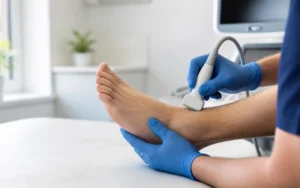
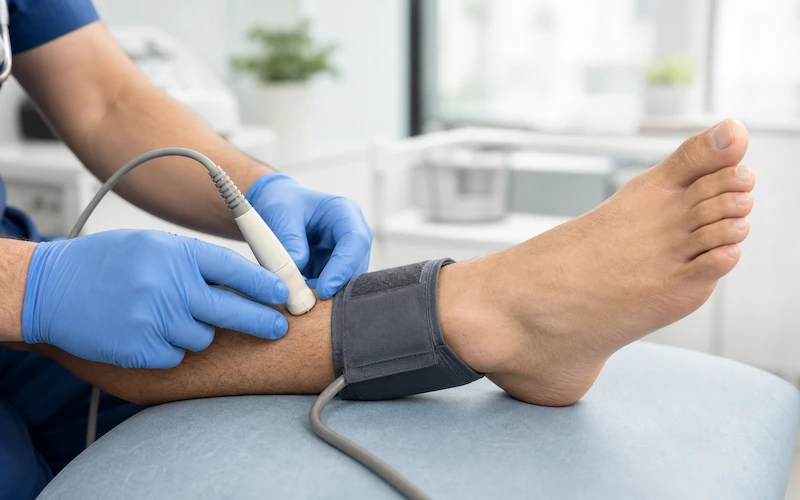
A circulation review usually begins with the history, appearance of the foot, temperature, pulses, and Doppler waveforms. Testing may include an ankle-brachial index (ABI), toe pressures, duplex ultrasound, transcutaneous oxygen measurement, skin-perfusion pressure, or vascular imaging.
No single test answers every question. ABI results can sometimes appear misleadingly high when arteries are difficult to compress, which is more common in people with diabetes or kidney disease. Toe pressures and other perfusion tests may provide additional information about whether enough blood is reaching the wound area to support healing.
Current diabetic-foot guidance recommends reassessing vascular status when an ulcer deteriorates or does not significantly improve despite appropriate infection control, glucose management, wound care, and offloading. Read more about circulation evaluation and limb preservation.
What if a blocked artery is found?
Treatment depends on the location and severity of disease, the condition of the wound, infection, overall health, and the patient’s goals. Care may include cardiovascular risk reduction, wound treatment, pressure relief, infection management, diabetes care, and a procedure to improve blood flow.
Restoring blood flow is called revascularization. It may be performed with a catheter-based treatment, surgical bypass, or a combination of approaches. For patients with chronic limb-threatening ischemia—a severe form of PAD associated with rest pain, a nonhealing wound, or gangrene—current PAD guidelines recommend revascularization when appropriate to minimize tissue loss, support wound healing, relieve pain, and preserve a functional limb.
Revascularization is not the entire treatment plan. The wound still needs coordinated care, and infection may require urgent antibiotics, drainage, or surgery. The best results often come from a team that can address blood flow, the wound, pressure, infection, and medical risk factors together.
When poor circulation becomes urgent
Seek urgent medical attention for black or rapidly darkening tissue, spreading redness or swelling, pus or a bad odor, fever, rapidly worsening pain, or a foot that suddenly becomes cold, pale, numb, or weak. These findings can signal severe ischemia, infection, or an acute loss of blood flow.
Do not wait for a routine appointment when symptoms are severe or changing quickly. Contact a clinician, go to urgent care or an emergency department, or call 911 for sudden or life-threatening symptoms. Review additional foot-wound and circulation warning signs.
The bottom line
Poor circulation can be the missing reason a foot ulcer does not heal. Dressings and local wound treatment remain important, but they cannot deliver blood through a severely narrowed or blocked artery. If an ulcer is stalled, recurring, worsening, or accompanied by rest pain or dark tissue, ask whether circulation has been evaluated all the way to the foot and toes.
Finding a blood-flow problem does not automatically determine one treatment. It creates the information needed for a vascular specialist and the rest of the care team to discuss the safest path toward healing and limb preservation.
This article provides general education and does not diagnose a condition or replace medical care. Treatment decisions should be made with a qualified healthcare professional.