A foot ulcer that stays open, keeps returning, or becomes deeper is not simply “taking a little longer” to heal. Healing depends on several systems working together: enough blood flow and oxygen must reach the tissue, pressure must be removed from the injured area, infection must be controlled, and conditions such as diabetes must be managed. When one or more of these pieces is missing, an ulcer can stall.
The most important next step is not to try a different home remedy. It is to find out why the wound is not healing—especially because poor circulation can place the foot and limb at risk.
Common reasons a foot ulcer does not heal
1. Poor blood flow
Arteries carry oxygen-rich blood to the legs and feet. Peripheral artery disease (PAD) can narrow or block those arteries, leaving the wound without enough oxygen and nutrients to repair itself. Dressings may protect the surface, but they cannot correct a serious blood-flow problem.
Poor circulation may be more likely if the foot feels unusually cold, the skin looks pale or bluish, the toes have darkened, pain becomes worse at night or when the leg is elevated, or the wound has shown little improvement despite appropriate care. Severe PAD associated with a nonhealing wound, rest pain, or gangrene may represent chronic limb-threatening ischemia, a condition that needs prompt vascular evaluation.
2. Ongoing pressure on the wound
Walking, standing, footwear, or an abnormal pressure point can repeatedly injure the same tissue. This is particularly common with ulcers on the sole, heel, or side of the foot. Offloading—using footwear, padding, a boot, a cast, or another method recommended by a clinician—helps protect the area so it can heal. Simply “staying off it when possible” may not remove enough pressure.
3. Infection
An ulcer can become infected even when there is no dramatic amount of drainage. Increasing redness, warmth, swelling, odor, pus, pain, fever, or red streaking can signal infection. Infection may extend into deeper tissue or bone, so worsening symptoms should be evaluated quickly rather than treated only with over-the-counter products.
4. Diabetes and nerve damage
Diabetes can affect healing in several ways. Neuropathy may reduce feeling, making it difficult to notice an injury or continued pressure. Diabetes can also increase infection risk and commonly overlaps with PAD. A person may therefore have a wound that is deeper or more serious than it feels. Learn more about diabetes and foot risks.
5. Dead tissue or an untreated underlying problem
Dead tissue can cover the wound and interfere with healing. Other problems—such as swelling, poor nutrition, smoking, kidney disease, uncontrolled blood sugar, or certain medications—may also slow recovery. A clinician should evaluate the whole patient, not only the visible surface of the ulcer.
Could wound care alone be missing the problem?
Wound care, podiatry, infection treatment, diabetes management, and vascular care can all be important. These services do different jobs. Cleaning and dressing the wound may be necessary, but if arterial blood flow is inadequate, local treatment alone may not be enough.
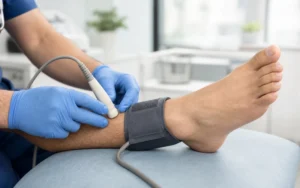
A circulation evaluation may include checking pulses and skin findings, an ankle-brachial index (ABI), toe pressures, Doppler waveforms, duplex ultrasound, or other perfusion tests. No single test is right for every patient, and ABI results can sometimes be difficult to interpret in people with diabetes. A vascular specialist can decide which tests fit the situation. Read more about circulation evaluation and limb preservation.
When should I seek urgent medical care?
Seek urgent medical attention now if you notice any of the following:
- Black, blue, or rapidly darkening tissue
- A foot that suddenly becomes cold, pale, numb, or weak
- Rapidly worsening or severe foot pain
- Spreading redness, warmth, swelling, pus, or a bad odor
- Fever, chills, confusion, or feeling seriously unwell with a foot wound
- A wound that is deteriorating quickly or exposing deeper tissue or bone
Do not wait for a routine appointment if these signs are present. Contact your clinician, go to urgent care or an emergency department, or call 911 when symptoms are severe or sudden. This website is not an emergency service.
What to ask at your next appointment
- Has the wound improved in size, depth, or appearance since the last visit?
- Has my circulation been assessed, including blood flow all the way to the foot and toes?
- Could pressure, footwear, infection, or dead tissue be preventing healing?
- Do I need a vascular specialist, podiatrist, wound-care clinician, or multidisciplinary limb-preservation team?
- What specific changes should make me seek urgent care?
The bottom line
A foot ulcer may not heal because of poor circulation, continued pressure, infection, diabetes-related nerve damage, or several problems at the same time. A stalled wound deserves a clear explanation and a coordinated plan. When blood flow is part of the problem, identifying it early may create more options to support healing, protect tissue, and preserve the limb.
If your wound has not been improving—or if you have pain at rest, dark tissue, or other warning signs—ask whether you need a specialized circulation review. You can also review frequently asked questions about foot wounds and circulation.
This article is for general education and does not diagnose a condition or replace medical care. Treatment decisions should be made with a qualified healthcare professional.